
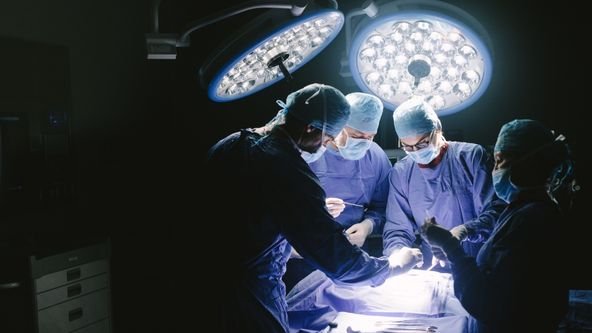
Advanced Spine Care by Dr. Ankit Daware
About Dr. Ankit Daware – Spine Surgeon in Nagpur
Dr. Ankit Daware is a highly skilled Orthopedic & Spine Surgeon specializing in diagnosing and treating complex spinal disorders. He is known for his excellence in Minimally Invasive Spine Surgery (MISS), which results in reduced pain, quicker recovery, and minimal scarring compared to traditional spine surgeries.
Key Expertise:
Minimally Invasive Spine Surgery
Cervical Spine Surgery
Lumbar Spine Surgery
Scoliosis & Kyphosis Correction
Degenerative Spine Disorder Treatment
Trauma & Fracture Management
Endoscopic Spine Surgery
Disc Replacement Surgery
Revision Spine Surgery
Patient-Centered Care
Dr. Daware believes spine care is not only about surgery; it’s about improving the patient’s complete lifestyle. His detailed evaluations, clear explanation of conditions, and personalized treatment plans ensure that every patient feels confident and supported throughout their healing journey.
Understanding Spine Conditions
1. Herniated or Slipped Disc
One of the most common spinal problems, a herniated disc occurs when the soft inner portion of the spinal disc pushes out through a tear. This can cause:
Sharp radiating pain
Numbness
Tingling
Muscle weakness
If conservative treatments fail, surgical intervention may be required to relieve pressure on the nerves.
2. Sciatica
Sciatica refers to pain that radiates along the sciatic nerve, which extends from the lower back through the hips and down the legs. Causes may include:
Herniated disc
Spinal stenosis
Piriformis syndrome
Treatment options range from medications and physiotherapy to minimally invasive decompression procedures.
3. Spinal Stenosis
This condition involves narrowing of the spinal canal, putting pressure on the spinal cord and nerves. Symptoms include:
Difficulty walking
Lower back pain
Weakness in the legs
Numbness or tingling
In advanced cases, decompression surgery offers significant relief.
4. Scoliosis & Kyphosis
These structural deformities cause abnormal curvature of the spine:
Scoliosis – sideward curvature
Kyphosis – forward curvature
When curvature progresses, surgical correction helps improve posture, lung function, and overall well-being.
5. Spondylolisthesis
This condition occurs when one vertebra slips forward over the one below it. It can cause lower back pain, leg pain, and difficulty in movement. Depending on severity, treatment ranges from physiotherapy to spinal fusion surgery.
6. Degenerative Disc Disease
With age, spinal discs weaken and lose hydration. This leads to:
Chronic back pain
Reduced flexibility
Disc collapse
Nerve compression
Modern surgical techniques can effectively manage advanced cases.
Types of Spinal Surgeries Offered by Dr. Ankit Daware
1. Minimally Invasive Spine Surgery (MISS)
MISS is a modern technique that uses small incisions, specialized instruments, and precise imaging guidance. Benefits include:
Less blood loss
Smaller incisions
Faster recovery
Minimal muscle damage
Reduced hospital stay
MISS is commonly used for:
Herniated disc removal
Spinal decompression
Spinal fusion
Nerve root decompression
2. Endoscopic Spine Surgery
Endoscopic spine surgery is one of the most advanced forms of minimally invasive surgery. It involves using a high-definition endoscope through a tiny incision to treat the disc or nerve problem.
Advantages:
No visible scar
Less post-operative pain
Quick return to daily activities
Highly precise results
This procedure is ideal for disc herniation and nerve compression.
3. Discectomy
A discectomy removes the part of a herniated disc that is pressing on the nerve. Dr. Daware performs:
Microdiscectomy (using a microscope)
Endoscopic discectomy
Both offer excellent success rates and quicker recovery.
4. Laminectomy
Laminectomy is performed to relieve pressure on the spinal nerves by removing the lamina (a portion of the vertebra). It is commonly used to treat:
Spinal stenosis
Severe nerve compression
5. Spinal Fusion Surgery
Spinal fusion permanently joins two or more vertebrae to stabilize the spine. Conditions that require fusion include:
Spondylolisthesis
Severe disc degeneration
Spinal instability
Deformities like scoliosis
Dr. Daware uses modern implants and minimally invasive techniques for improved results.
6. Artificial Disc Replacement
Instead of removing the disc and fusing the vertebrae, disc replacement involves inserting an artificial disc to preserve natural movement.
Best for:
Neck pain due to cervical disc degeneration
Lower back disc problems in selected cases
7. Scoliosis and Deformity Correction Surgery
Using specialized instrumentation, Dr. Daware corrects severe spinal deformities. This improves:
Alignment
Balance
Breathing
Function
Such surgeries are planned with advanced imaging and navigation systems.
8. Trauma & Fracture Management
Spine injuries due to falls, accidents, or sports activities require immediate expert attention. Dr. Daware provides comprehensive care for:
Vertebral fractures
Spinal cord injury stabilization
Post-traumatic deformities
Non-Surgical Treatments
Not all patients require surgery. Dr. Daware emphasizes conservative treatments such as:
Medication
Physiotherapy
Epidural steroid injections
Lifestyle modification
Postural correction
Strengthening exercises
Only when these fail, surgery is recommended.
Symptoms That Indicate You Need a Spine Specialist
You should consult Dr. Ankit Daware if you experience:
Persistent back or neck pain lasting more than two weeks
Pain radiating to arms or legs
Numbness or tingling
Muscle weakness
Loss of bladder or bowel control
Difficulty standing or walking
Pain after injury or fall
Early diagnosis prevents complications and ensures faster recovery.
Diagnosis & Imaging Techniques
To accurately diagnose spine disorders, Dr. Daware uses:
X-ray
MRI Scan
CT Scan
EMG/NCV studies
Blood tests
Flexion-extension X-rays
These help identify nerve compression, disc issues, bone abnormalities, and spinal instability.
Recovery After Spine Surgery
Recovery depends on the type of surgery and overall health. Most patients experience:
Quick relief from nerve pain
Early mobilization
Shorter hospital stays
Post-surgery care includes:
Pain management
Physiotherapy sessions
Walking and light movements
Avoiding heavy lifting
Regular follow-ups
With minimally invasive techniques, many patients return to routine activities within a few weeks.