
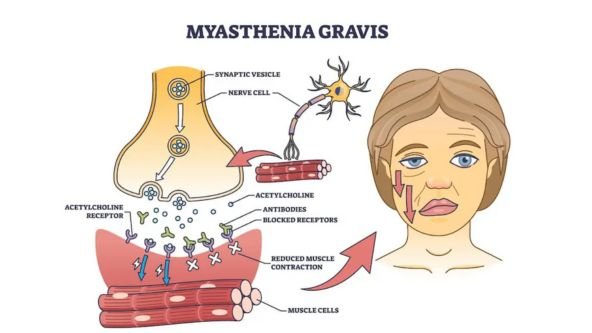
Symptoms of Myasthenia Gravis
Myasthenia Gravis presents differently in each patient. Symptoms often worsen with activity and improve with rest.
Common Symptoms Include:
Drooping eyelids (ptosis)
Double vision (diplopia)
Fatigue while chewing or swallowing
Slurred speech
Difficulty smiling or making facial expressions
Weakness in arms or legs
Shortness of breath
Difficulty holding up the head
Sudden muscle fatigue after mild physical activity
Early recognition of these symptoms helps start treatment quickly and prevents complications like Myasthenic Crisis.
Types of Myasthenia Gravis
1. Ocular Myasthenia Gravis
Affects only eye muscles—causing drooping eyelids and double vision.
2. Generalized Myasthenia Gravis
Affects multiple muscle groups including arms, legs, face, throat, and respiratory muscles.
3. Congenital Myasthenic Syndromes
Rare genetic conditions present from birth.
4. Myasthenic Crisis
A severe, life-threatening condition causing respiratory failure—requires emergency medical care.
Dr. Daware provides precise diagnosis to identify the type and severity, ensuring that every patient receives tailored treatment.
Diagnostic Approach at Dr. Ankit Daware’s Clinic
Accurate diagnosis is the foundation of effective treatment. Dr. Daware follows an internationally accepted multi-step evaluation:
✔ Detailed Medical History & Neurological Examination
Evaluates pattern of muscle weakness, fatigue, reflexes, and functional capability.
✔ Blood Tests for Antibodies
Acetylcholine receptor (AChR) antibodies
MuSK antibodies
LRP4 antibodies
✔ Electrophysiological Tests
Repetitive Nerve Stimulation (RNS)
Single Fiber Electromyography (SFEMG)
These tests help determine neuromuscular transmission defects.
✔ Ice Pack Test / Edrophonium Test
For quick confirmation in eye muscle weakness.
✔ Imaging – CT/MRI of Chest
To evaluate the thymus gland for enlargement, tumors, or thymoma.
✔ Lung Function Tests
To assess breathing capacity, especially if respiratory weakness is suspected.
This comprehensive evaluation ensures accurate diagnosis and treatment planning.
Treatment Options for Myasthenia Gravis by Dr. Ankit Daware
Dr. Daware provides full-spectrum treatment for all forms of MG. The goal is to improve muscle strength, reduce symptoms, prevent complications, and enhance lifestyle quality.
1. Medications
✔ Anticholinesterase Agents
These medications improve muscle strength by increasing acetylcholine levels at the neuromuscular junction.
Used for immediate symptom relief.
✔ Immunosuppressants
Reduce abnormal immune activity that causes MG.
Used for long-term control.
✔ Steroids
Helps reduce inflammation and autoimmune response.
✔ Biologic Therapies
Newer advanced options for patients not responding to standard treatments.
2. IVIG Therapy (Intravenous Immunoglobulin)
A fast-acting treatment for severe symptoms or during Myasthenic Crisis.
Helps stabilize the immune system.
3. Plasmapheresis / Plasma Exchange
A procedure that removes harmful antibodies from the blood.
Used for severe or rapidly progressing cases.
4. Thymectomy (Thymus Removal Surgery)
Recommended when the thymus gland shows enlargement or thymoma.
Many patients experience long-term improvement after surgery.
Dr. Daware works closely with experienced thoracic surgeons to coordinate thymectomy when needed.
5. Lifestyle, Diet & Exercise Guidance
Patients are educated on:
Energy conservation techniques
Avoiding triggers (infections, stress, certain medicines)
Balanced diet and hydration
Gentle physiotherapy exercises
Eye protection for double vision
Speech therapy or swallowing guidance (if needed)
This holistic care helps patients manage day-to-day challenges effectively.
Myasthenic Crisis – Emergency Awareness
Myasthenic Crisis occurs when respiratory muscles become too weak to function.
It is a life-threatening emergency.
Warning Signs Include:
Severe shortness of breath
Inability to swallow or speak
Rapid fatigue
Cyanosis (bluish lips)
Sudden weakness in neck or chest muscles
Emergency therapies include ICU monitoring, oxygen support, IVIG, and plasmapheresis.
Dr. Daware educates every patient on identifying early warning signs to prevent complications.
Life After Diagnosis – Living Well with Myasthenia Gravis
With the right care, most patients lead active, independent, and fulfilling lives.
Dr. Daware focuses on:
Maintaining long-term remission
Preventing disease flare-ups
Reducing medication side effects
Supporting mental and emotional well-being
Helping patients return to normal routines
Regular follow-ups and monitoring are essential to maintain optimal strength and prevent crises.