
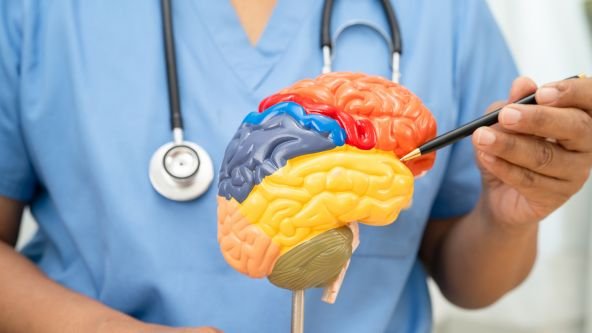
Alzheimer’s Disease Treatment – Dr. Ankit Daware
Brain tumors can be life-changing, but early diagnosis and the right treatment can significantly improve recovery, survival, and quality of life. This comprehensive guide covers everything you need to know about brain tumors, their symptoms, types, diagnosis, treatment options, and why thousands of patients trust Dr. Daware for expert brain tumor management in Nagpur.
What is a Brain Tumor?
A brain tumor is an abnormal growth of cells within the brain. As the tumor enlarges, it increases pressure on brain tissue, affecting functions such as memory, movement, coordination, vision, and speech. Tumors can develop in brain cells, nerves, glands, or spread from other parts of the body.
Brain tumors are categorized into:
1. Benign (Non-Cancerous) Tumors
These grow slowly, do not spread to other parts, and often have better outcomes after surgery.
2. Malignant (Cancerous) Tumors
These grow rapidly, spread to nearby structures, and require aggressive treatment.
3. Primary Brain Tumors
Originate in the brain itself.
4. Secondary (Metastatic) Brain Tumors
Spread from cancers like lung, breast, kidney, or melanoma.
Understanding the tumor type is crucial for personalized treatment planning—an area where Dr. Ankit Daware’s expertise excels.
Common Symptoms of Brain Tumors
Symptoms vary depending on the tumor’s size, growth rate, and location. Early identification helps in faster treatment.
Most common symptoms include:
Persistent or severe headaches
Morning headaches associated with vomiting
Seizures or convulsions
Sudden changes in vision
Loss of balance
Weakness in limbs
Difficulty speaking or understanding speech
Memory loss or confusion
Personality or behavioral changes
Hearing difficulties
Loss of sensation in face or body
Hormonal disturbances
Sudden fainting or unconsciousness
If you notice these signs, immediate consultation with a neurosurgeon like Dr. Ankit Daware is recommended.
Types of Brain Tumors Treated by Dr. Ankit Daware
Dr. Daware specializes in treating all major types of brain tumors, including rare and complex cases.
1. Gliomas
Astrocytoma
Glioblastoma multiforme (GBM)
Oligodendroglioma
Ependymoma
2. Meningiomas
The most common benign brain tumor.
3. Pituitary Adenomas
Affect hormone levels and vision.
4. Acoustic Neuroma (Vestibular Schwannoma)
Causes hearing problems and balance issues.
5. Medulloblastoma
Highly malignant pediatric tumor.
6. Craniopharyngioma
Affects children and young adults.
7. Pineal Region Tumors
8. Brain Metastasis
Tumors that spread from other cancers.
9. Skull Base Tumors
Complex tumors requiring high surgical precision.
10. Intraventricular Tumors
Tumors located in brain’s fluid spaces.
Dr. Daware is known for handling high-risk, deep-seated, and complex brain tumors with superior outcomes using advanced neurosurgical technology.
Diagnosis of Brain Tumors
Accurate diagnosis is key to successful treatment. Dr. Daware follows a detailed evaluation approach that includes:
1. Neurological Examination
To assess reflexes, vision, hearing, balance, coordination, and memory.
2. MRI Brain (with Contrast)
Gold standard imaging for brain tumors.
3. CT Scan of Brain
Useful for emergency cases like bleeding or fractures.
4. MR Spectroscopy
Helps differentiate tumor type.
5. Functional MRI (fMRI)
Maps essential brain functions to plan safe surgery.
6. PET Scan
Detects metabolic activity of cancerous cells.
7. Biopsy
Confirms tumor grade and characteristics.
8. Hormonal Tests (for pituitary tumors)
9. Genetic & Molecular Testing
Helps choose targeted therapies.
Advanced Brain Tumor Treatment Options by Dr. Ankit Daware
Treatment depends on tumor type, location, grade, and overall health of the patient. Dr. Daware offers a personalized, multimodal approach which includes:
1. Microsurgical Brain Tumor Removal
Using high-powered microscopes, Dr. Daware performs precise surgeries minimizing damage to healthy brain tissues.
Benefits include:
Smaller incision
Less blood loss
Faster recovery
Reduced hospital stay
2. Minimally Invasive Neuroendoscopic Surgery
A modern technique where tumors are removed through small natural openings or minimal skull openings.
Ideal for:
Pituitary adenomas
Ventricular tumors
Colloid cysts
3. Skull Base Surgery
Used to remove tumors near critical nerves and blood vessels.
Dr. Daware is trained in:
Endoscopic skull base surgery
Transnasal pituitary surgery
Micro-vascular decompression
4. Awake Brain Tumor Surgery
Performed while the patient is awake.
Helps protect essential brain functions responsible for:
Speech
Movement
Vision
Memory
This advanced technique is ideal for tumors located near functional brain areas.
5. Stereotactic Surgery
A highly accurate, GPS-guided surgical method.
Used for:
Deep-seated tumors
Small but critical tumors
Biopsy of complex lesions
6. Radiation Therapy
Recommended when surgery is not possible or for residual cancer cells after surgery.
Types include:
Image-guided radiation therapy (IGRT)
Intensity-modulated radiation therapy (IMRT)
Stereotactic radiosurgery (SRS)
7. Chemotherapy
Used particularly for aggressive tumors like GBM.
Combined with radiation for maximum effectiveness.
8. Targeted Therapy
Works on genetic markers of tumors.
Has fewer side effects than chemotherapy.
9. Immunotherapy
Helps the body’s immune system attack cancer cells.
Promising results in high-grade tumors.
10. Rehabilitation & Post-Surgery Care
Includes:
Physiotherapy
Speech therapy
Occupational therapy
Neuro-psychological rehabilitation
Dr. Daware focuses on complete recovery—not just tumor removal.
Why Choose Dr. Ankit Daware for Brain Tumor Treatment in Nagpur?
✓ Highly Experienced Neurosurgeon
Expert in treating complex brain and spine conditions.
✓ Advanced Technology & Modern OT Setup
Including neuro-navigation, endoscopy, intraoperative monitoring, high-magnification microscopes.
✓ Expert in Minimally Invasive Surgery
Smaller cuts, faster recovery, lower risk.
✓ High Success Rate in Complex Brain Tumors
Specializes in managing tumors near the brainstem, optic nerves, and functional areas.
✓ Patient-Friendly Approach
Explains treatment in simple terms with complete transparency.
✓ Multidisciplinary Care
Works with oncologists, radiologists, and rehabilitation experts for comprehensive care.
✓ Personalized Treatment Plans
Every patient receives a customised approach for the best outcomes.
Lifestyle & Recovery After Brain Tumor Treatment
Recovery depends on tumor type, the extent of surgery, and patient health. Dr. Daware provides personalized guidance for:
Diet & nutrition
Sleep regulation
Stress management
Physical activity
Avoiding smoking & alcohol
Mental health support
Lifestyle & Recovery After Brain Tumor Treatment
Recovery depends on tumor type, the extent of surgery, and patient health. Dr. Daware provides personalized guidance for:
Diet & nutrition
Sleep regulation
Stress management
Physical activity
Avoiding smoking & alcohol
Mental health support
When Should You Consult Dr. Ankit Daware?
Seek immediate consultation if you experience:
Persistent or worsening headaches
Sudden seizures
Vision or hearing changes
Unexplained weakness or numbness
Behavioural or memory issues
Sudden imbalance or dizziness
Early detection saves lives.