
Scoliosis and Kyphosis Surgery in Nagpur
What is Scoliosis?
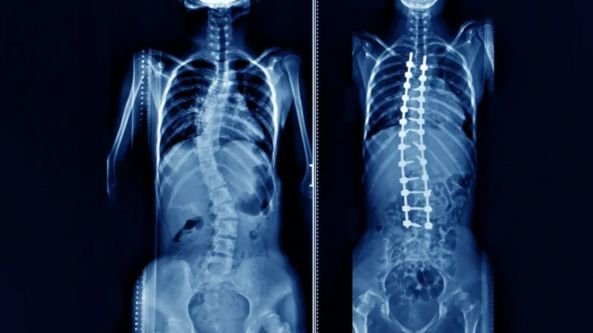
Scoliosis is a medical condition that causes the spine to curve sideways, forming an “S” or “C”-shaped curvature. Instead of being straight, the spine rotates and bends, leading to uneven shoulders, hips, and posture. Scoliosis can range from mild to severe, depending on the degree of curvature.
Although many cases begin during adolescence, adults may develop scoliosis due to degeneration, injuries, or previous untreated childhood scoliosis.
Types of Scoliosis
1. Idiopathic Scoliosis
The most common type, usually found in teenagers. Its exact cause is unknown.
2. Congenital Scoliosis
Caused due to abnormal spinal development in the womb.
3. Neuromuscular Scoliosis
Occurs due to neuromuscular disorders like cerebral palsy or muscular dystrophy.
4. Degenerative Scoliosis
Seen in older adults due to age-related spinal wear and tear.
What is Kyphosis?
Types of Kyphosis
1. Postural Kyphosis
Common in adolescents due to poor posture.
2. Scheuermann’s Kyphosis
A structural deformity where the vertebrae become wedge-shaped.
3. Congenital Kyphosis
Present at birth due to spinal malformation.
4. Degenerative Kyphosis
Caused by arthritis, osteoporosis, or disc degeneration.
Common Symptoms of Scoliosis and Kyphosis
Both conditions may progress silently during early stages. However, some signs include:
Scoliosis Symptoms
Uneven shoulders
Unequal hip height
Visible side bending of the spine
One shoulder blade sticking out
Back pain or muscular fatigue
Clothes not fitting evenly
Breathing problems in severe cases
Kyphosis Symptoms
A forward-bending posture
Rounded upper back
Back stiffness
Fatigue and muscle tightness
Difficulty standing upright
Severe cases may cause breathing issues
Early diagnosis plays a crucial role in stopping progression and avoiding complicated surgery.
Diagnosis of Scoliosis and Kyphosis
To provide precise treatment, Dr. Ankit Daware begins with a detailed evaluation that includes:
1. Physical Examination
✔ Checking posture
✔ Measuring curvature
✔ Evaluating balance and gait
✔ Identifying muscle imbalances
2. Spine X-rays
Used to measure the Cobb angle, which determines the severity.
3. MRI or CT Scan
Recommended when nerve compression, congenital issues, or complex deformities are suspected.
4. Neurological Assessment
To check reflexes, strength, and sensation.
Correct diagnosis ensures personalized and effective treatment planning.
Non-Surgical Treatment Options
Before recommending surgery, Dr. Ankit Daware focuses on non-surgical approaches wherever possible.
1. Physiotherapy and Exercise
Helps strengthen spinal muscles, improve flexibility, and reduce pain.
2. Bracing
Effective in adolescents to prevent curve progression.
3. Pain Management
Medications, lifestyle changes, and posture correction.
4. Spine Rehabilitation Programs
Designed specifically for scoliosis and kyphosis patients.
While these treatments may not completely reverse spinal deformity, they help slow progression and improve comfort.
When is Surgery Needed?
Scoliosis or kyphosis surgery is recommended when:
The spinal curvature is progressing rapidly
Cobb angle is more than 45–50 degrees (in scoliosis)
Kyphosis curve exceeds 70 degrees
Non-surgical treatments fail
There is significant back pain
Breathing or heart function is affected
The deformity affects daily life or appearance
Dr. Ankit Daware evaluates every case thoroughly to determine the right time for surgery.
Scoliosis and Kyphosis Surgery – Advanced Treatment Options
Spine deformity correction surgery aims to:
Straighten and stabilize the spine
Relieve nerve pressure
Improve posture
Stop further curvature progression
Enhance lung function
Improve quality of life
Dr. Ankit Daware uses modern technology and precise surgical techniques to ensure safe and successful outcomes.
Types of Surgical Procedures
1. Spinal Fusion Surgery
The most common surgery for scoliosis and kyphosis. Metal rods, screws, and bone grafts are used to straighten and stabilize the spine.
2. Vertebral Column Resection (VCR)
Used for severe, rigid deformities where one or more vertebrae are removed and realigned.
3. Pedicle Subtraction Osteotomy (PSO)
A wedge-shaped section of bone is removed to correct severe kyphosis.
4. Growth Modulation Surgery (for children)
Allows the spine to grow naturally while correcting curvature.
5. Minimally Invasive Spine Surgery (MISS)
Smaller incisions, reduced blood loss, quicker recovery.
Benefits of Surgery
Patients experience:
Major curve correction
Reduced back pain
Improved posture & appearance
Better breathing capacity
Improved physical activity
Higher self-confidence
Long-term spinal stability
Many patients resume normal life and daily activities within months
Recovery After Surgery
Dr. Ankit Daware provides a structured rehabilitation plan:
Hospital Stay:
4–6 days depending on procedure.
Pain Relief:
Modern anesthesia & medications ensure comfortable recovery.
Walking:
Patients begin walking within 24–48 hours.
Back Brace:
May be required for a few weeks.
Physiotherapy:
Continues for several months.
Return to Normal Life:
School/work: 4–6 weeks
Full recovery: 6–12 months
Sports: after surgeon approval
Individual recovery differs, and Dr. Daware monitors each patient closely during follow-ups.